
Your Rights · Sep 2
Cheapest Days to Fly (And When It Actually Matters)

Most flight-booking advice is either outdated or pulled from data that doesn’t mean what the headline says. We’ve dug through the research, so here’s what actually holds up: the day you fly matters more than the day you book , and neither one matters as much as your booking window. Here’s what the data shows, and what to do with it.

What makes this guide different from the standard “book on Tuesday” advice is that we treat flight pricing the way it actually works: as a dynamic system where the day you fly, how far out you book, and the route you’re on all interact. No single rule wins every time.
The caveat: we don’t have a proprietary fare database. We rely on published research and data from Going.com, Forbes, and The Points Guy, and we tell you when those sources disagree. That transparency is the point.
Key Takeaway: The day you fly consistently produces bigger savings than the day you book , focus your energy there first.
1. Saturday , The Overlooked Budget Day Most Travelers Ignore
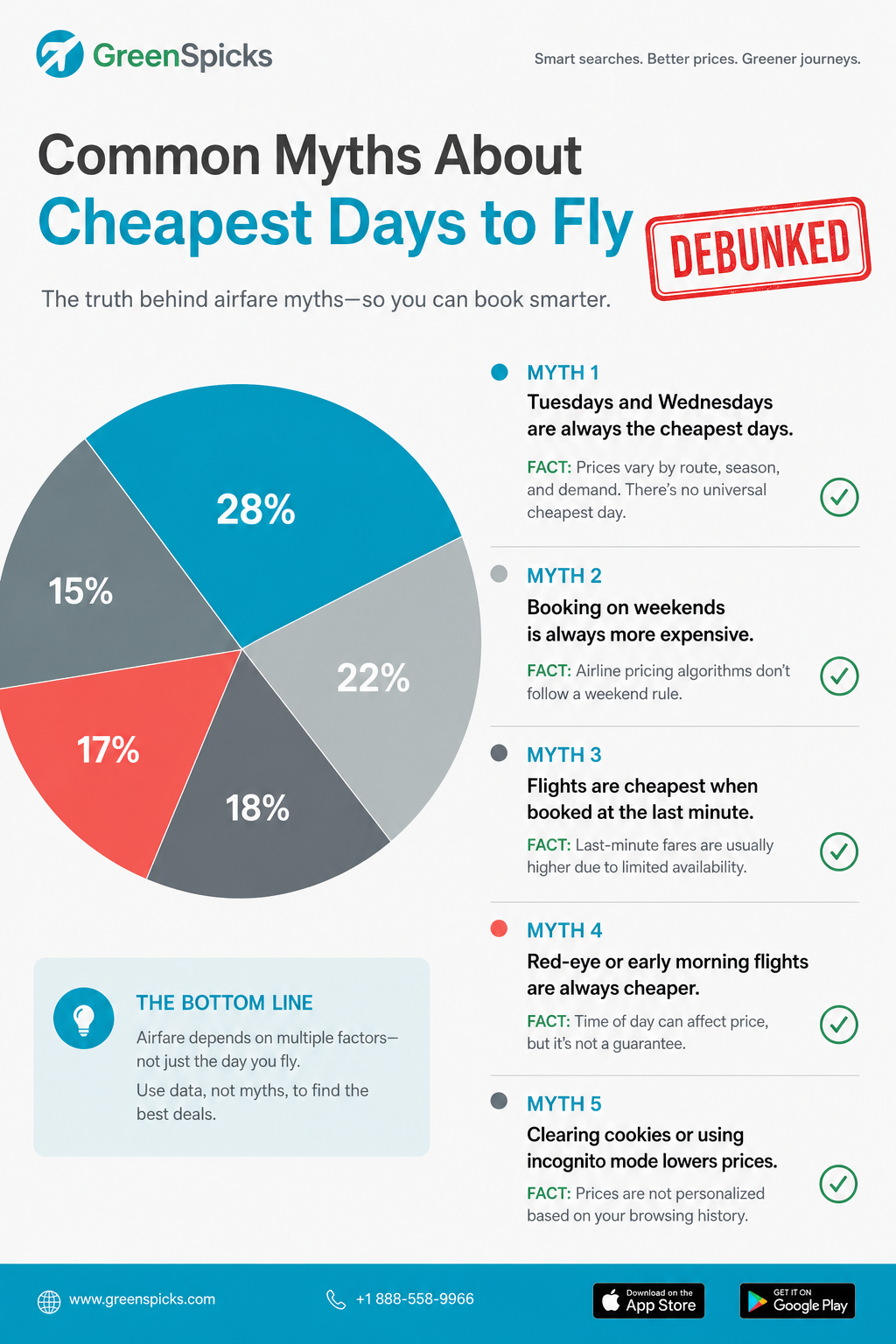
Everyone tells you to fly Tuesday or Wednesday. That’s not wrong. But Saturday is the overlooked option that most advice skips entirely.
According to Going.com, Saturday departures can sometimes deliver discounts in both cash and miles compared to the weekly average. The catch they’re honest about: it’s not guaranteed. It depends on demand for that specific route. A Saturday flight from Chicago to New York might be packed with weekend leisure travelers. A Saturday flight from a mid-tier hub to a secondary market might be nearly empty.
Travel experts generally agree that Tuesday, Wednesday, and Saturday are among the better days for travel because business travelers are out on Mondays and back on Fridays, making those days the most expensive. Saturday sits in an odd middle ground where demand is lower than Friday or Sunday but the savings aren’t as reliable as mid-week.
The usable move: when you’re searching, always check Saturday alongside Tuesday and Wednesday. Don’t assume it’s expensive just because it’s a weekend day. The gap between Saturday and Sunday fares can be surprisingly wide on many routes, with Sunday running notably higher because it’s the most popular return day for weekend trips.
2. Red-Eye and Early-Morning Flights , Cheapest Time of Day to Fly
The cheapest flights of the day are the ones most people don’t want to take. Red-eyes and early-morning departures (before 8 a.m.) consistently price lower because demand is lower. Simple supply and demand.
The trade-off is real. Taking the last flight of the day means if cancellations stack up from earlier delays, you could end up sleeping at the airport. Early-morning flights carry less of that risk since they’re usually the first departure of the day and rarely delayed by prior aircraft issues.
For budget travelers, the early-morning window is usually the better call. You arrive with the day ahead of you, delay risk is lower, and fares are often noticeably cheaper than the mid-morning peak window when most people prefer to fly.
Late-night departures after 8 p.m. also tend to price lower. If it’s a long-haul domestic flight where you’d sleep on the plane anyway, a red-eye can make sense both financially and logistically. For shorter hops under two hours, the early-morning option is almost always the better move.
One thing the guides won’t tell you: check the connecting-flight time of day too. A cheap red-eye that lands at a hub at 6 a.m. and connects to a 7 a.m. departure is a tight sprint with checked bags. Price the convenience cost honestly before you book.
3. Tuesday at 3 p.m. EST , The Optimal Booking Time, Not Just Departure Day
Here’s the most specific piece of advice in this whole guide, and it comes from how airline pricing used to work: Tuesday at 3 p.m. Eastern.
The logic that travel industry analysts have long pointed to is that airlines have historically launched deals on Monday. Competitors see those deals and race to match the price. By Tuesday afternoon around 3 p.m. Eastern, most airlines have finished matching each other and the fare floor has settled. You’re not waiting for a further drop , you’re catching the point where the competing airlines have all moved to their lowest offer.
Is this still reliable? Partially. Airline pricing algorithms now update constantly, sometimes dozens of times a day on a single route. The Tuesday 3 p.m. pattern is less of a hard rule and more of a starting point. But it’s a better starting point than random. If you’re going to pick a time to check prices with intent to buy, Tuesday afternoon is a reasonable moment to look.
Industry research has found that Friday is now the cheapest day to book flights overall, with Sunday being the most expensive booking day. Tuesday still leads for domestic US departures specifically, with fares averaging about 14 percent lower than Sunday departures. These findings don’t cancel each other out. They reflect different datasets and different route mixes.
Pro Tip: Set a price alert on the route you want before Tuesday, then check back Tuesday afternoon. You’re not timing a stock trade , you’re just giving yourself a deliberate moment to act when fares are more likely to be settled.
4. The 3-to-15-Week Domestic Booking Window , When to Actually Buy
The day you fly matters. The time of day you book matters a little. But the booking window matters most.
For domestic US flights, the optimal booking window is generally 3 to 15 weeks before departure. Booking data consistently points to a sweet spot around 38 days out, with fares typically hitting their lowest around 5 to 7 weeks before the flight.
Book too early and you’re paying a premium before demand has shaped the price downward. Book inside the two-week window and you’re almost certainly paying a late-booking spike. The airlines know the window too, and fares tend to rise sharply in the final 14 days as remaining seats get priced for urgency.
One genuine exception: summer domestic travel. For July and August US flights, fares sometimes drop inside the final six-week window as airlines try to fill seats. If you’re flexible on exact dates and flying within the US or Canada in summer, waiting a bit longer than you normally would can actually pay off.
For holiday travel, the rules tighten considerably. Thanksgiving flights should be booked 3 to 8 weeks out , meaning by early October at the latest. For Christmas and New Year’s, aim for 6 to 10 weeks ahead, which puts the deadline around end of October. Miss that window and the cheap seats are gone.
5. International Flights , Different Rules, Longer Lead Times
International pricing doesn’t follow the same calendar as domestic. The sweet spot shifts to 3 to 6 months before departure, with fares on most routes hitting their lowest around the 100-day mark.
For long-haul routes , Asia, Australia, South Africa , bump that out to 5 to 7 months if you’re traveling in high season. A US-to-Japan flight in December or January, which is peak season for that corridor, needs to be booked in the early summer to catch the best fares.
One counter-intuitive finding from KAYAK’s data: international fares can sometimes be cheapest just 1 to 2 weeks out on less popular routes or off-peak departures. The caveat is significant , this works when airlines are trying to fill seats on less popular routes or off-peak departures. On high-demand routes and popular travel windows, waiting until the last two weeks is expensive. Treat this as an opportunistic strategy for flexible travelers, not a default plan.
For international travel, Wednesday tends to offer the best day-of-week fares, of their own booking data. Friday and Saturday departures internationally run higher, particularly for return flights. If you’re booking a round trip, returning mid-week rather than on a Sunday or Monday can make a meaningful difference to the total fare.
Business and first class on international routes work differently still. Airlines sometimes release their best premium fares either when the schedule first opens (around 11 months out) or very close to departure when unsold premium seats get discounted. Neither window is reliable enough to plan around , but checking both makes sense if you’re targeting a business class seat.
6. Business vs. Leisure Traveler Pricing Dynamics , Why the Averages Lie
Here’s why a lot of the “cheapest day to book” data is misleading: it’s often tracking average spend per day, not actual fare prices.
Brett Snyder, a former airline pricing analyst and founder of Cranky Concierge travel service, explained the problem to 10 Tampa Bay News. Families tend to book flights on weekends and they go for cheaper options. Business travelers book during the week and are less price-sensitive , they’re often booking premium cabins or last-minute seats. So data that averages spend by booking day ends up showing lower averages on weekends, not because fares are cheaper, but because the buyers are different.
This skew affects every “best day to book” study that doesn’t control for traveler type. When you see Saturday ranked as a cheap booking day, it may just mean that Saturday buyers buy cheaper tickets, not that Saturday has lower fares available. Going.com accounts for this in how they present their findings, which is one reason their data is more useful than a simple day-of-week average.
The usable implication: don’t rely on day-of-booking statistics as your primary strategy. The booking window (how far out you buy) and the day you actually fly are more controllable variables with cleaner data behind them.
If you’re planning a trip that combines business stops with a leisure extension, this dynamic works in your favor. Book the leisure legs the way we’ve described here. For the business segments, your employer’s travel policy may lock you into specific dates anyway, so the optimization question mostly applies to the vacation portion.
7. Google Flights Flexible Dates and the No-Destination Hack
The single most useful tool for finding cheap fares is also the one most travelers underuse. Google Flights has a flexible dates view that shows you a full calendar grid of fares, so you can see at a glance the actual price difference between a midweek departure and a weekend one on your specific route. That visual immediately does what no rule-of-thumb can , it shows you the actual price difference for your specific route.
But the more powerful move is what travel creator Casper Capital calls the no-destination hack. Open Google Flights, enter your departure city, and leave the destination blank. Hit the map view. The map populates with prices to dozens of cities from your airport, and you can filter by month, trip length, or non-stop only. A non-stop flight from Chicago to New Orleans for $169 or a round trip to Dallas for $100 becomes visible immediately. You’re not searching for a price on a trip you’ve already decided on , you’re letting the price map suggest the trip.
This approach works best for flexible travelers who have a departure window but not a fixed destination. It’s less useful if you have a specific wedding or work event to reach. But for open-ended vacation planning, it reframes the whole process. Instead of asking “how cheap can I fly to Barcelona?” you ask “where can I fly for under $200 round trip this October?” Those are very different questions with very different answers.
Price alerts are the other tool worth using consistently. Set an alert on a specific route 2 to 4 months before your intended travel date. When the fare drops to a price you’d book at, you get notified. Price tracking alerts consistently outperform “best day” rules because fares move on demand, not on a calendar schedule.
8. The Myth of a Single Cheapest Day , Dynamic Pricing Explained
Every piece of advice in this guide comes with an asterisk, and here’s why: airline pricing is not static.
A single domestic flight can change price many times over the year it’s available , sometimes as often as every few days. Airlines now run algorithms that adjust fares in real time based on demand, available seats, competitor pricing, and historical booking patterns for that route. There’s no weekly reset. There’s no moment on Tuesday afternoon when all the airlines simultaneously lower their prices and hold them there for you to grab.
What does remain true is that certain patterns repeat often enough to be useful starting points. Mid-week departures (Tuesday and Wednesday) tend to be cheaper because fewer people want them. Forbes pegs Wednesday’s average domestic fare at around $56, establishing a useful baseline , though that number can spike well above $60 during busy periods on popular routes. The 3-to-15-week booking window for domestic flights holds up in most analyses. Early-morning and red-eye fares are consistently lower than mid-day departures.
These are tendencies, not rules. The best strategy is to use them as filters when you’re comparing options, not as substitutes for actually checking prices. Treat every booking as route-specific: what’s true for a Chicago-to-Miami fare in January may not hold for a Denver-to-Seattle fare in July. Check the actual calendar, set an alert, and book when the price is right for your budget , not because a blog post told you Thursday is cheap.
If you’re planning an adventure trip that combines a cheap flight with ground-based exploration after you land, overlanding and vehicle-based travel publications cover that side of the equation well, from gear reviews to route planning for travelers who want to keep moving once they touch down.
Frequently Asked Questions
What is the cheapest day of the week to fly?
Tuesday and Wednesday are consistently the cheapest days to fly domestically, with Tuesday averaging about 14 percent less than Sunday departures across multiple industry analyses. Wednesday domestic fares average around $56 per Forbes. Saturday can also offer lower fares than Friday or Sunday on many routes, but the savings are demand-dependent and not guaranteed on every route.
Does it actually matter what day you book a flight?
Less than most advice suggests. Airline pricing algorithms update in real time based on demand, not day-of-week schedules. Industry research has found Friday is among the cheapest days to book flights overall, with Sunday among the most expensive. But the booking window , how far in advance you buy , has a bigger impact on price than which day of the week you click purchase.
How far in advance should I book a domestic flight?
For domestic US flights, book between 3 and 15 weeks before departure. The sweet spot is around 38 days out, where fares tend to be lowest. Booking inside two weeks of departure almost always means paying a late-booking premium. For holiday travel like Thanksgiving or Christmas, book 6 to 10 weeks ahead , those windows fill fast and prices spike hard once cheap seats are gone.
Is Tuesday really the best day to book flights?
It was more reliable when airlines updated fares on a set weekly schedule. Today, fares change dozens of times daily on busy routes. Tuesday at 3 p.m. Eastern still has logic behind it , competitors tend to have finished price-matching Monday deals by then , but it’s a starting point, not a guarantee. Setting a price alert and booking when the fare hits your target is more reliable than any single day rule.
What’s the Google Flights no-destination trick?
Enter your departure city in Google Flights, leave the destination blank, and open the map view. It shows fares to dozens of cities from your airport so you can find cheap routes you hadn’t considered. Filter by non-stop flights and a specific month to narrow it down. It works best for travelers with flexible destinations who want to let the price suggest the trip rather than the other way around.
Are red-eye flights always cheaper?
Usually, yes. Early-morning departures (before 8 a.m.) and late-night flights (after 8 p.m.) consistently price lower because fewer travelers want them. The trade-off for late-night flights is delay risk: if earlier flights in the day cancel or delay, that last departure can be disrupted. Early-morning flights avoid most of that risk and often arrive with time left in the destination day.
The Short Version: What Actually Moves the Needle
Fly Tuesday, Wednesday, or Saturday when you can. Book 3 to 8 weeks out for domestic trips, 3 to 6 months for international. Check early-morning fares before assuming a better time slot is worth the premium. Use Google Flights’ flexible calendar view to see the actual price spread across days, and set a price alert rather than obsessing over which day to click buy.
Affiliate disclosure: some booking, card, and trusted-traveler links earn us a commission at no extra cost to you. Rankings and recommendations are set by true cost, never by payout.
Keep readingAll stories

Fares & Bags · Sep 1
How to Set Up Flight Alerts and Save on Airfare

Fares & Bags · Aug 30