
Security · Nov 1
Airline Wi-Fi Cost in 2026: What Each US Airline Charges
The answer
On most major US airlines in 2026, Wi-Fi is free once you join the airline's loyalty program, which is also free. Delta, American, JetBlue, Southwest, and Alaska cost you nothing if you are a member. United is the outlier that still charges, at $8 to $10 per flight. Frontier has no Wi-Fi yet.
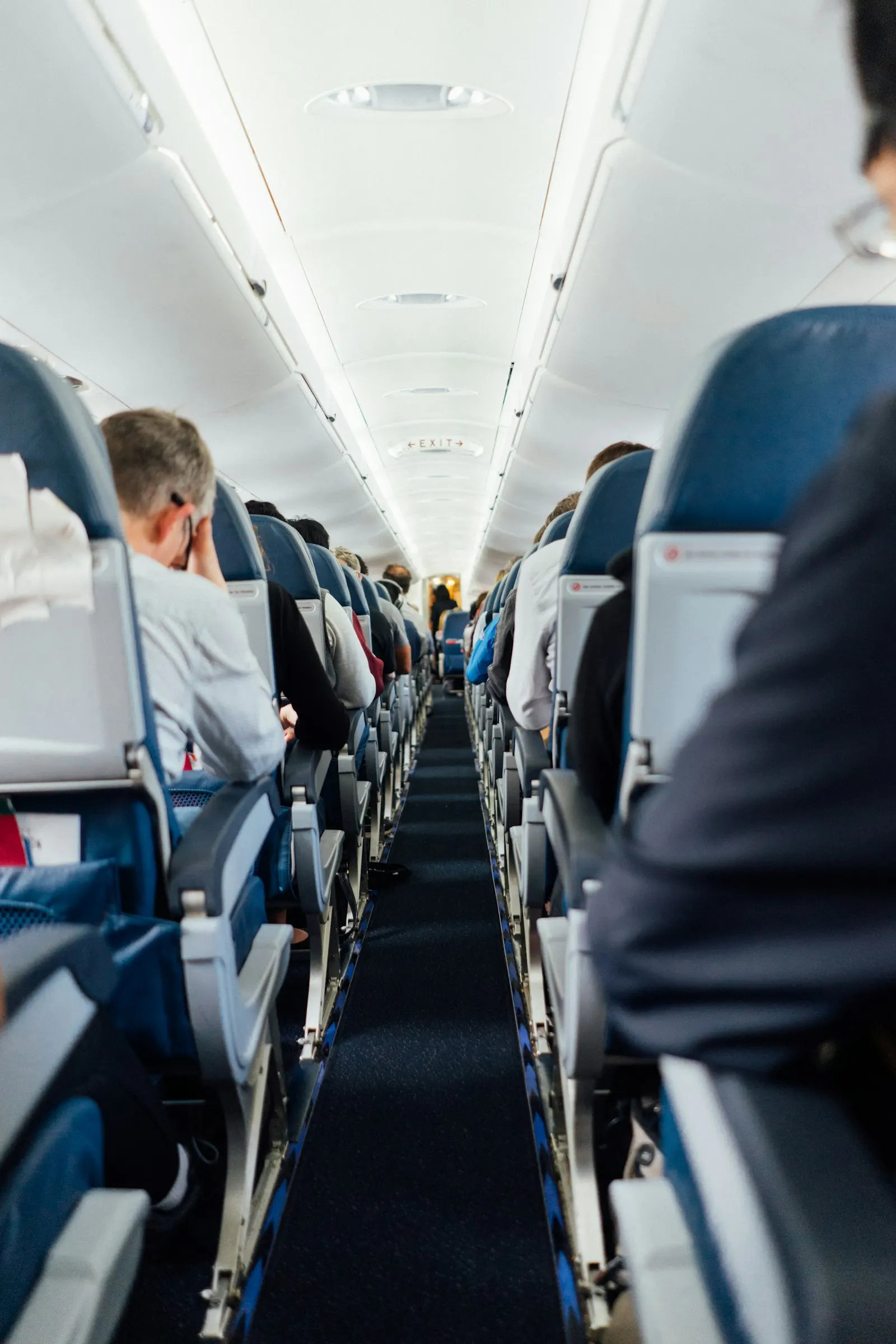
On most major US airlines in 2026, in-flight Wi-Fi costs you nothing, as long as you join the airline’s loyalty program first. The program is free. Delta, American, JetBlue, Southwest, and Alaska all give free Wi-Fi to members, and JetBlue gives it free to everyone with no membership at all. United is the one big carrier that still charges per flight, at $8 for MileagePlus members or $10 for everyone else.
That is the whole answer for most people, so it is the first thing on this page. The catch is the word “member.” On four of those five airlines, the free price only applies once you are enrolled and signed in, and only on aircraft that have the newer equipment. If you skip the enrollment step or you are on an older plane, you can still be looking at a paid screen.
Everything below is the per-airline breakdown, what “free for members” actually requires, and the honest part most airline pages leave out: free Wi-Fi that too many people are using at once is often slower than the paid Wi-Fi it replaced. Every figure here comes from the airline’s own current pages or its 2026 press releases, verified for this article on September 12, 2026.
What airline Wi-Fi costs right now, by carrier
Here is the real 2026 price for a single US domestic flight on each major airline. “Member” means enrolled in that airline’s free loyalty program.
| Airline | Cost for members | Cost for non-members | Notes |
|---|---|---|---|
| JetBlue | Free | Free | Free for everyone, every seat, every plane. No membership needed. |
| Delta | Free | Not offered without a free account | Delta Sync, on most domestic flights. Sign in with SkyMiles. |
| American | Free | About $10 per flight | Free for AAdvantage members since January 2026, sponsored by AT&T. |
| Southwest | Free | $8 per device, per flight | Free for Rapid Rewards members. Paid access on select aircraft only. |
| Alaska | Free on Starlink aircraft | $8 per flight on older aircraft | Free for Atmos Rewards members on Starlink-equipped planes. |
| United | $8 or 800 miles | $10 per flight | The outlier. United still charges per flight on non-Starlink planes. |
| Frontier | No Wi-Fi | No Wi-Fi | Starlink announced for early 2027. Nothing to buy in 2026. |
Two carriers are missing from that list on purpose. Spirit Airlines ceased all operations in May 2026, so its old Wi-Fi pricing no longer applies to anyone. Frontier has no Wi-Fi on any aircraft as of this writing. Frontier has announced Starlink for early 2027 but has not published a price, so treat Frontier as a no-Wi-Fi airline for any flight you book today.
Source: Pricing verified against jetblue.com, delta.com, aa.com, southwest.com, alaskaair.com, and united.com, September 12, 2026.
The one rule that decides your price: enroll before you fly
The biggest reason people pay for Wi-Fi they could have had free is that they never joined the program. On Delta, American, Southwest, and Alaska, the free price is tied to your loyalty account, not to your ticket. You have to be signed in for the system to recognize you.
Do this before you board, not at 35,000 feet on a slow signal:
- Join the airline’s loyalty program on the ground. SkyMiles for Delta, AAdvantage for American, Rapid Rewards for Southwest, Atmos Rewards for Alaska. Each one is free and takes a few minutes.
- Save your login. The in-flight portal asks for your member number or email and password. Have it ready.
- Connect to the airline Wi-Fi network after takeoff, open the portal, and sign in.
- If the portal still shows a price, check the airline name on the screen. Free Wi-Fi only works on aircraft that have the newer equipment, which is covered in the next section.
JetBlue is the exception to all of this. Its Fly-Fi is free to every passenger with no account, so you can skip the enrollment step entirely.
”Free for members” only counts on the right aircraft
Free Wi-Fi is not on every plane in the fleet yet. Airlines are installing it aircraft by aircraft, and the older planes still run the paid systems. This is the part the marketing pages gloss over, so here is where each airline actually stands in 2026.
- Delta has Delta Sync, presented by T-Mobile, on more than 1,200 aircraft, and says it is targeting the full fleet by the end of 2026. Most domestic mainline flights are covered.
- American turned on free AAdvantage Wi-Fi in January 2026, sponsored by AT&T, and says it reached roughly 90 percent of the fleet at launch, rolling toward nearly every flight through spring.
- United is the outlier because free Wi-Fi only comes with its Starlink planes, and Starlink was on about 450 aircraft as of mid-July 2026, heading toward roughly 1,000 by year-end. On the rest of United’s fleet, you pay $8 or $10.
- Alaska gives free Wi-Fi to Atmos Rewards members only on Starlink-equipped aircraft. On its older planes, the price is a flat $8 per flight. Alaska expects Starlink across the whole fleet by the end of 2027.
The practical takeaway: on Delta, American, and JetBlue, assume your flight is covered but confirm at the portal. On United and Alaska, do not assume free. Check the network screen after you connect, because your specific plane decides your price.
What you pay on United, the last big holdout
United is the major US airline that still charges most passengers for Wi-Fi in 2026. On flights without Starlink, a single-flight pass is $8 or 800 miles for MileagePlus members, and $10 for everyone else. United also sells a monthly subscription for $49 or 7,500 miles that covers North and Central America.
If you fly United a few times a month on non-Starlink routes, the math on the $49 monthly pass is simple. Six or more paid flights in a month means the subscription beats buying passes one at a time. Fewer than that, and the per-flight $8 is cheaper. The free path on United is to get onto a Starlink aircraft, where MileagePlus members pay nothing, but you cannot always choose the plane, so budget for the paid price when you book United.
The catch nobody prints: free Wi-Fi is often the slow Wi-Fi
Free does not always mean good. When American opened its Wi-Fi to everyone with an account, more people logged on at once, and speeds dropped. One American flyer, quoted in trade coverage of the rollout, said that after the paywall came down, “the service has been absolute garbage” on seven or eight straight flights. The Points Guy covered the same pattern under the headline that the free Wi-Fi rollout “hits a speedbump.”
The reason is the equipment, not the price. Older geostationary satellite systems from providers like Panasonic, Viasat, and Gogo deliver roughly 15 to 35 Mbps with 500 to 800 milliseconds of latency. That is fine for email and messaging. It struggles with video calls, and it gets worse as the cabin fills up. The newer Starlink systems on United and Alaska tested at 150 Mbps and up with very low latency, which is a different experience entirely.
So the honest version of the answer is this. If you just need to send messages and check email, free member Wi-Fi is worth the two minutes it takes to enroll. If you need a reliable video call or to move large files, the aircraft’s technology matters far more than whether you paid, and only the Starlink planes are dependable for that today.
How to pay $0 on your next flight
Put the pieces together and the no-cost path is short:
- Fly JetBlue if it serves your route, since its Wi-Fi is free with no account.
- Otherwise, join the free loyalty program for whichever airline you booked, and sign in at the portal after takeoff.
- If you are a T-Mobile customer, check your plan before you fly. T-Mobile is the sponsor behind free Wi-Fi on Delta, Southwest, and Alaska, and it includes in-flight sessions on qualifying plans, so you may already be covered.
- On United, look for a Starlink aircraft for free MileagePlus Wi-Fi. If your plane is not equipped, expect to pay $8 to $10.
One caveat worth stating plainly: none of this fixes a slow plane. Enrolling gets you a free connection, not a fast one. On an older aircraft during a full flight, even free Wi-Fi may be too slow to be useful, and there is no amount of money that upgrades the satellite over your head mid-flight.
Where Wi-Fi fits in the true cost of a ticket
Wi-Fi is one line in the larger picture of what a flight actually costs after the base fare. If you are comparing carriers on total cost, the bigger numbers are usually the bag fees and the fare class, not the Wi-Fi. See our breakdown of checked bag fees by airline and what basic economy gives up versus main cabin before you decide a fare is cheap. For flyers who lean on airline apps and portals, our guide to using credit card points for flights covers how loyalty accounts pay off beyond Wi-Fi.
The bottom line
In 2026, airline Wi-Fi is free for members on Delta, American, JetBlue, Southwest, and Alaska, and free for everyone on JetBlue. The single step that decides your price is joining the free loyalty program before you fly and signing in at the portal. United is the last big carrier that charges most passengers, at $8 to $10 per flight, with a free path only on its Starlink aircraft. Frontier has no Wi-Fi to buy at all until its Starlink launch in 2027. And the part the airlines will not print: on an older, crowded plane, free Wi-Fi is often the slow Wi-Fi, so the aircraft matters as much as the price. Confirm the cost at the in-flight portal on your specific plane, since figures change and equipment varies flight to flight.
Affiliate disclosure: some booking, card, and trusted-traveler links earn us a commission at no extra cost to you. Rankings and recommendations are set by true cost, never by payout.
Keep readingAll stories
Security · Oct 20
TSA PreCheck vs CLEAR: Which Is Better in 2026

Security · Oct 18