Security · Nov 1
TSA PreCheck vs CLEAR: Which Is Better in 2026
The answer
Buy TSA PreCheck first. It is cheaper, works at three times as many airports, and shortens the screening itself. Add CLEAR Plus only if your home airport is a jammed hub and a credit card covers the fee.
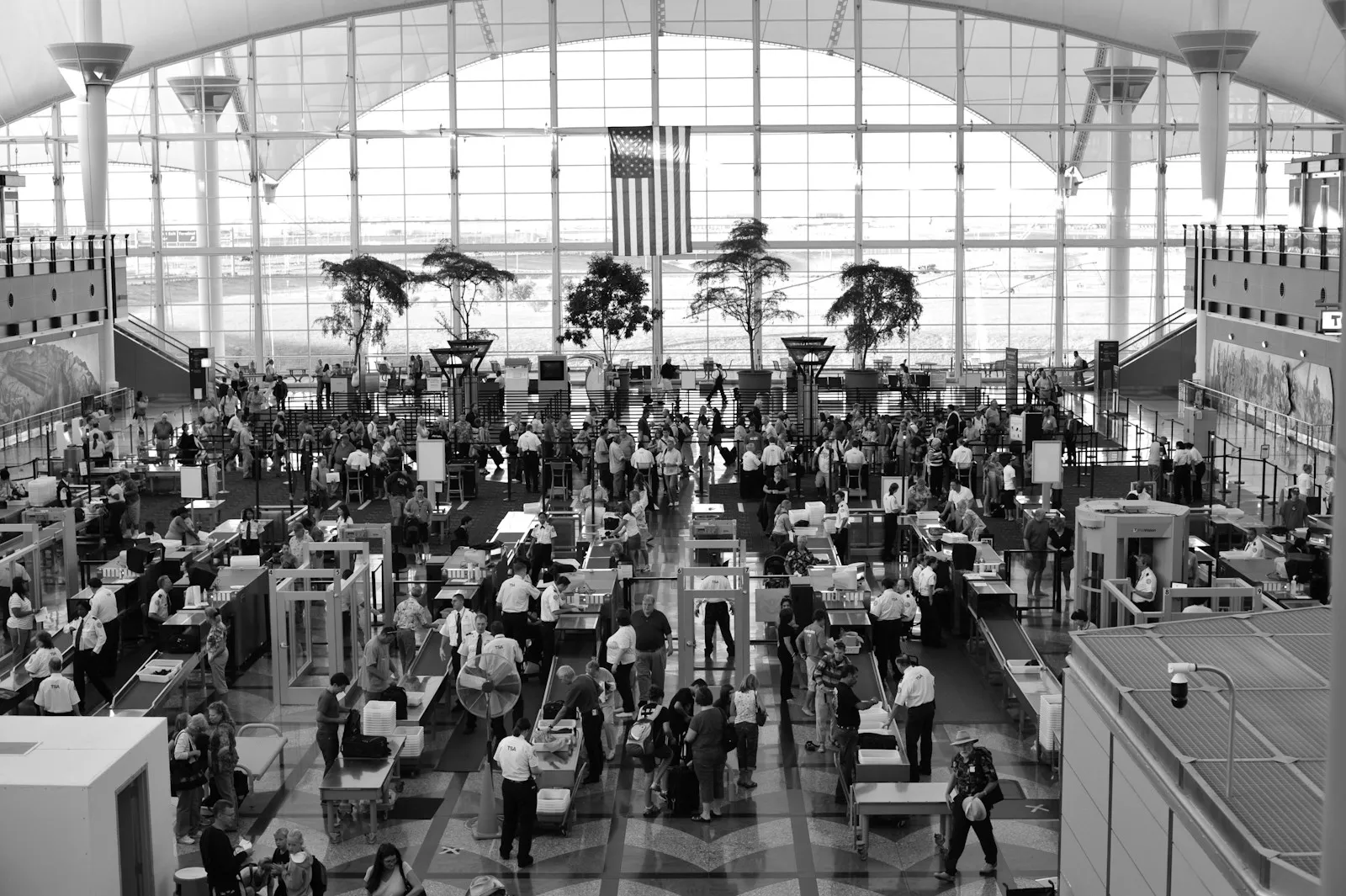
If you are choosing between TSA PreCheck vs CLEAR and can only buy one, buy TSA PreCheck. It costs as little as $79.75 for five years, it runs at more than 200 US airports, and it changes the screening itself, so you keep your shoes and belt on and your laptop in the bag. CLEAR Plus costs $219 every year, operates at 62 airports, and only moves you to the front of a line you still have to go through. CLEAR is an add-on for frequent flyers at crowded hubs, not a replacement for PreCheck.
That is the decision for most people. The rest of this page shows the current prices, what each program actually skips, where each one works, and the narrow cases where paying for both makes sense. All figures were checked against tsa.gov and clearme.com as of October 2026.
The two programs solve different problems
The confusion starts because both products promise a faster trip through security, but they attack different parts of the line.
Airport security has two stages. First an officer or a machine confirms you are who your boarding pass says you are. Then you and your bags go through physical screening. PreCheck speeds up the second stage. CLEAR speeds up the first.
TSA PreCheck is a federal trusted traveler program run by the Transportation Security Administration. After a background check, you get a Known Traveler Number and access to dedicated PreCheck lanes. In those lanes you keep shoes, belts, and light jackets on, and you leave laptops and 3-1-1 liquids in your carry-on. The screening itself is shorter and the lane usually moves faster.
CLEAR Plus is a product from a private company. At a CLEAR pod, a scan of your eyes or fingerprints replaces the document check, and a CLEAR staff member escorts you past the queue to the front of the physical screening line. CLEAR does not change what happens at the scanner. If you do not also have PreCheck, you arrive at the front of the standard line and take your shoes off like everyone else.
Side by side
Here is the comparison that decides the purchase. All figures are current as of October 2026.
| TSA PreCheck | CLEAR Plus | |
|---|---|---|
| What it speeds up | The screening itself | The identity check before screening |
| Run by | TSA, a federal agency | CLEAR, a private company |
| Price | $79.75 to $85 for 5 years, by enrollment provider | $219 per year |
| Cost per year | About $16 to $17 | $219 |
| Shoes, belt, laptop, liquids stay put | Yes | No, unless you also have PreCheck |
| Where it works | More than 200 US airports, more than 90 airlines | About 62 US airports, 150+ lanes |
| Background check | Yes, fingerprints and a federal vetting process | No federal vetting, identity verification only |
| Kids | Children 12 and under join a PreCheck adult free | Children 17 and under join a CLEAR member free |
| Enrollment | Online application plus a 10-minute in-person visit | At an airport pod in minutes, or start online |
The price gap is the headline. Over five years, PreCheck costs about $80 once. CLEAR costs $1,095 at the sticker rate. For CLEAR to be worth that, the identity-check queue at your airport has to be a real, recurring problem.
What each one costs in detail
TSA PreCheck enrollment is handled by three authorized providers, and the price depends on which one you pick. As of October 2026, tsa.gov lists new five-year enrollment at $79.75 through IDEMIA, $84.95 through CLEAR, and $85.00 through Telos. Online renewal is cheaper, from $58.75 with IDEMIA, $69.95 with Telos, or $72.95 through CLEAR. The product is identical regardless of provider, so pick the cheapest one with a convenient enrollment center.
CLEAR Plus is $219 per year as of October 2026. You can add up to three adults to your account at $125 each per year, and kids 17 and under go through the CLEAR lane free with a member. Military and government personnel can enroll for $125 per year at airport locations.
CLEAR also sells a bundle. If you enroll in PreCheck through CLEAR as your provider, the TSA page shows a first-year CLEAR Plus price of $134 instead of $219, and $146 alongside a PreCheck renewal. The bundle renews at the full $219 after the first year, so treat it as a discounted trial, not a lower ongoing price.
Very few frequent flyers pay the CLEAR sticker price. Several premium credit cards carry a statement credit that covers some or all of the $219 annual fee, and Delta and United loyalty members get discounted rates through their programs. If a card you already hold covers CLEAR, the math changes completely, because the question stops being “is this worth $219” and becomes “is this worth using.” Check your card’s current benefits page before you pay cash. Our guide to which credit cards cover the Global Entry and PreCheck fee covers the application-fee credits on the federal side.
Enrollment and how long approval takes
PreCheck starts with an online application, then a short in-person appointment for fingerprints and a document check. Bring a passport, or a REAL ID plus proof of citizenship status, depending on the documents the provider accepts. Most applicants receive their Known Traveler Number within three to five days, though TSA says it can take up to 60 days. Once you have the number, add it to every airline profile and every booking, because the PreCheck mark prints on the boarding pass per reservation. If you are sorting out identification anyway, see our guide to the REAL ID requirement for flying.
CLEAR enrollment is faster because there is no federal background check. You can start online and finish at a CLEAR pod in the airport in a few minutes, scanning your eyes and fingerprints and showing a photo ID. You can often enroll on the way to a flight and use the lane the same day.
Coverage is the quiet dealbreaker
PreCheck runs at more than 200 US airports with more than 90 participating airlines, which in practice means almost any domestic trip you take. CLEAR operates at about 62 airports. Those 62 include most of the big hubs, but if your home airport or your usual destinations are mid-size cities, you can pay $219 and find no CLEAR lane on either end of your trip. Before you buy, check CLEAR’s current airport list for the airports you actually use, not the airports the ad shows.
There is also a newer wrinkle. TSA has been rolling out free facial-recognition identity verification, often called Touchless ID, for PreCheck members on participating airlines at a growing list of airports. Frequent flyers on Reddit increasingly report that the free Touchless lane beats the CLEAR lane at some airports. One traveler in r/AmexPlatinum put it plainly, saying the new lanes are quick where they exist and that it “really depends on airport and time.” Where Touchless ID is live, it erodes the one thing CLEAR sells.
Who should get which
Match the program to how you actually fly, not to how premium the kiosk looks.
- You fly a few times a year, mostly domestic. Get PreCheck and stop there. At about $16 a year it is the best money in US air travel, and the CLEAR fee would buy you very little.
- You fly monthly or more from a crowded hub. Get PreCheck first, then consider adding CLEAR Plus, ideally covered by a card credit. At airports where even the PreCheck queue backs up at peak hours, CLEAR in front of PreCheck is the fastest combination available.
- You are tempted by CLEAR alone. Do not do it. CLEAR without PreCheck walks you to the front of the standard line, where you still unpack liquids and remove shoes. Paying $219 a year to keep the slower screening is the worst configuration of the three.
- You also fly internationally. The better upgrade is Global Entry, which costs $120 for five years, includes PreCheck, and adds a faster customs lane when you fly home. We compare the two federal programs in detail in our Global Entry vs TSA PreCheck guide.
The honest caveat is that neither program guarantees a short wait. PreCheck lanes back up at peak banks at big hubs, CLEAR pods can stack up behind a handful of enrollments, and some airports close the PreCheck lane entirely during slow hours. Both products improve your odds. Neither one promises a number of minutes.
Common questions
Do I really need CLEAR if I have TSA PreCheck? In most cases, no. PreCheck alone covers the majority of trips well. CLEAR earns its fee only if your airports have CLEAR lanes, you fly often enough to hit long document-check queues, and ideally a card credit pays for it.
Is CLEAR faster than TSA PreCheck? They are not the same race. CLEAR gets you to the front of a line faster. PreCheck makes the screening at the end of the line faster. The fastest setup is both together, where CLEAR deposits you at the front of the PreCheck lane.
Is there a downside to TSA PreCheck? The application takes a form, an appointment, and up to 60 days of waiting, and the PreCheck mark only prints when your airline participates and your Known Traveler Number is on the booking. The five-year cost is small enough that for most US flyers there is no real argument against it.
Which should I buy first? PreCheck, in every case. It is the cheaper program, the more widely available one, and the only one of the two that changes what you do at the scanner. Add CLEAR later if your travel pattern proves you need it.
Affiliate disclosure: some booking, card, and trusted-traveler links earn us a commission at no extra cost to you. Rankings and recommendations are set by true cost, never by payout.
Keep readingAll stories

Security · Oct 18
Can You Bring a Lighter on a Plane? TSA and FAA Rules
Security · Oct 17