Your Rights · Sep 2
Carry-On Size Limit by Airline in 2026: The Numbers That Actually Matter
The answer
A bag sized 22 x 14 x 9 inches fits every major US airline. Southwest and Frontier allow up to 24 x 16 x 10, but a bag built to their limit will not fit the 22 x 14 x 9 majority — so size to the standard if you fly more than one airline.
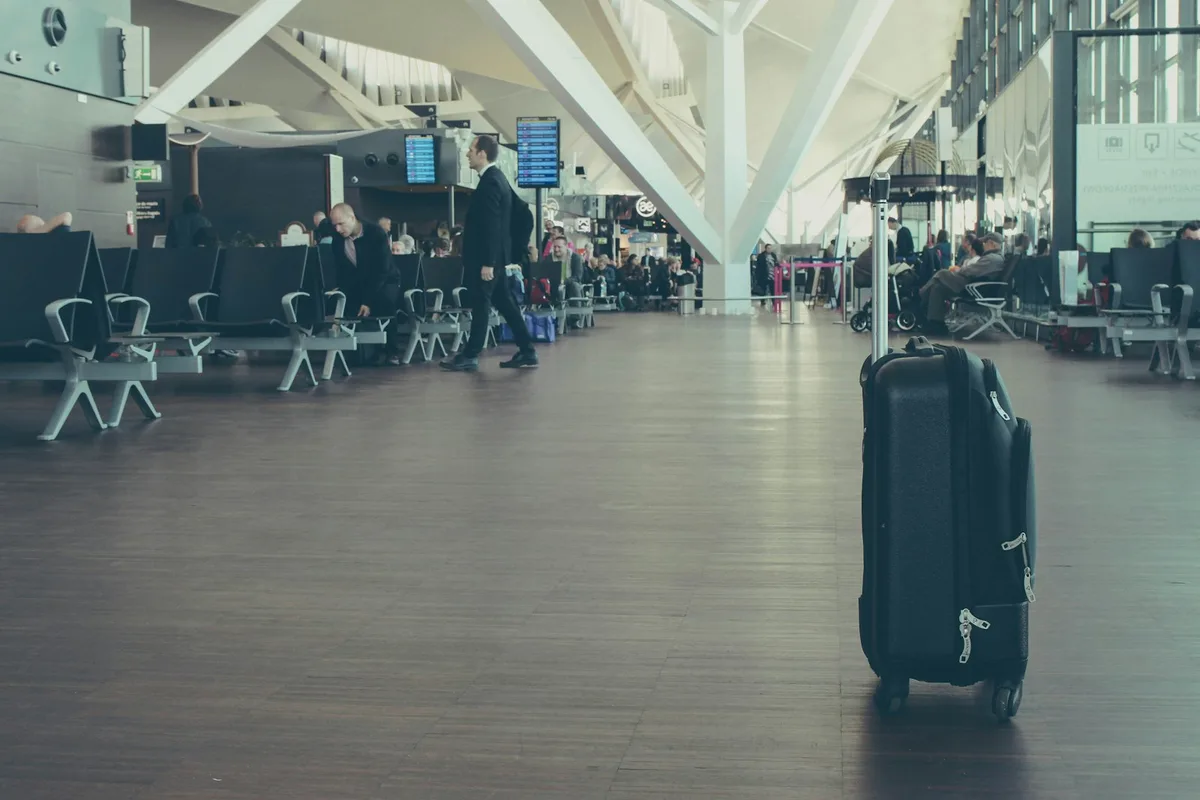
If you only remember one number, make it 22 x 14 x 9 inches. That is the de-facto carry-on standard in the US, and a bag built to it fits American, Delta, United, JetBlue, and Alaska without argument. Southwest and Frontier actually allow bigger bags, but that is a trap: a suitcase sized to their limit will not fit the airlines that hold the line at 22 x 14 x 9.
That is the whole game. The rest of this guide gives you the exact limit for each major US airline, the personal-item dimensions, the two things people get wrong at the gate, and why the number on the tape measure — not the number on the luggage tag — is what the sizer cares about.
Every dimension below was checked against the airlines’ published carry-on policies as of August 2026. Where an airline’s own page confirmed the figure directly it is marked verified; where the airline’s page blocks automated access, the figure comes from that airline’s published policy and is cross-checked against independent sources, which is noted. Airlines change these rules, so confirm on the carrier’s own page before you fly.
Carry-on size limits by airline
| Airline | Carry-on max (L x W x H) | Personal item max | Carry-on free on cheapest fare? |
|---|---|---|---|
| American | 22 x 14 x 9 in | 18 x 14 x 8 in | Yes |
| Delta | 22 x 14 x 9 in | Fits under seat (no published dims) | Yes |
| United | 22 x 14 x 9 in | 17 x 13 x 9 in | No — Basic Economy is personal item only |
| Southwest | 24 x 16 x 10 in | Fits under seat (no published dims) | Yes |
| JetBlue | 22 x 14 x 9 in | 17 x 13 x 8 in | Yes |
| Alaska | 22 x 14 x 9 in | Fits under seat (no published dims) | Yes |
| Spirit | 22 x 18 x 10 in | 18 x 14 x 8 in | No — carry-on is paid |
| Frontier | 24 x 16 x 10 in (max 35 lb) | 18 x 14 x 8 in | No — carry-on is paid |
Two dimensions matter here, and people forget the second one. The carry-on goes in the overhead bin. The personal item goes under the seat in front of you. On the airlines where the cheapest fare does not include a carry-on — United Basic Economy, Spirit, and Frontier — the personal item is the only bag you get for free, so its size limit suddenly matters a lot.
The 22 x 14 x 9 standard, and who breaks from it
Five of the major carriers — American, Delta, United, JetBlue, and Alaska — all cap the carry-on at 22 x 14 x 9 inches. That is why a bag sold as “carry-on size” is almost always built to those exact numbers. If your bag measures 22 x 14 x 9 or less, you are covered across every legacy and major carrier.
Two airlines are more generous:
- Southwest allows 24 x 16 x 10 inches (verified on Southwest’s own carry-on policy page).
- Frontier allows 24 x 16 x 10 inches, with a 35-pound weight cap (verified on Frontier’s own bag-options page).
Spirit is the odd one: 22 x 18 x 10 inches — the same 22-inch length as the standard, but wider and deeper.
Here is the practical trap. If you buy a bag sized to Southwest’s or Frontier’s 24 x 16 x 10 limit, it is four inches too long and two inches too wide for American, Delta, United, JetBlue, and Alaska. It will not fit their sizers. So unless you fly only Southwest or only Frontier, size your bag to 22 x 14 x 9 and it works everywhere. The generous limits are a nice bonus on those two airlines, not a target to build toward.
Wheels and handles count — this is the mistake
The single most common reason a “22-inch” bag fails the gate sizer: the airlines measure the whole bag, including wheels and handles. A suitcase advertised as a 22-inch carry-on is often 23 or 24 inches once you include the spinner wheels and the retractable handle housing.
Delta, JetBlue, Alaska, Spirit, and Frontier all state explicitly that wheels and handles are included in the measurement. Southwest counts attachments too. American and United publish total-bag dimensions without spelling out the wheels, but the sizer at the gate measures the physical bag, wheels and all. So the safe assumption on every airline is the same: wheels and handles count.
What this means in practice: don’t trust the size printed on the luggage tag. Take a tape measure to your packed bag, wheels and handle included, and confirm it clears 22 x 14 x 9. Manufacturers measure the body of the bag; airlines measure the object that has to go in the bin.
The personal item is the sneaky one
On most airlines the personal item — a backpack, purse, laptop bag, or small tote — is measured loosely as long as it fits under the seat in front of you. Delta, Southwest, and Alaska don’t even publish dimensions; the rule is simply “it fits under the seat.”
But on the airlines where the free allowance is only the personal item, the published dimensions get strict:
- United (Basic Economy): 17 x 13 x 9 in
- Spirit: 18 x 14 x 8 in
- Frontier: 18 x 14 x 8 in
- JetBlue: 17 x 13 x 8 in
If you are flying a budget fare and traveling on the personal item alone, this is the number that decides whether you pay a gate fee. Frequent budget flyers get a soft-sided bag built to roughly 18 x 14 x 8 that compresses into the sizer, precisely so it maxes the free allowance without triggering a charge.
Free carry-on vs. paid carry-on
Not every airline lets you bring a full-size carry-on for free on the cheapest fare. This is where the real money hides.
Carry-on is free (all standard economy, including basic fares): American, Delta, Southwest, JetBlue, Alaska. JetBlue added a free carry-on to its cheapest Blue Basic fare in September 2024, closing a gap it used to have.
Carry-on costs extra or is not allowed on the cheapest fare:
- United Basic Economy: you get the personal item only. A full carry-on is not included, and if you show up with one, you pay at the gate.
- Spirit and Frontier (ultra-low-cost carriers): the carry-on is always a paid add-on. Only the personal item is free.
The Spirit and Frontier trap is worth stating plainly, because travelers get caught by it constantly: paying for the carry-on online is far cheaper than paying at the gate. A carry-on prepaid during booking runs in the range of $60; the same bag paid at the gate can jump to roughly $99–$100 each way. The airlines price it that way on purpose. If you are flying Spirit or Frontier with a carry-on, pay for it when you book — never let it become a gate transaction.
(One note on Spirit: the airline has been going through Chapter 11 restructuring, and its published policies have been in flux. Its 22 x 18 x 10 carry-on and 18 x 14 x 8 personal item are its stated limits, but confirm on Spirit’s live page before you travel.)
What changed recently
A few 2024–2025 shifts are worth knowing:
- JetBlue added a free carry-on to Blue Basic (September 6, 2024), so its cheapest fare now includes the overhead bag.
- Southwest ended its “bags fly free” policy for checked bags, but the free carry-on is unchanged — every Southwest fare still includes a carry-on and a personal item. (If checked bags are your concern, see our guide to airlines with free checked bags.)
- American began phasing out gate sizers in late 2025, instructing agents to err on the side of the traveler. That is a softening of enforcement, not a change to the 22 x 14 x 9 limit — the rule still stands, the tape measure is just less likely to come out.
The honest bit about gate enforcement
Enforcement is inconsistent, and travelers are right to be frustrated by it. The same bag that flew fine on ten flights gets pulled on the eleventh. Whether the sizer comes out often depends on how full the overhead bins are and which agent is working the gate. Basic Economy and last-boarding-group passengers are the most likely to get checked, because by the time they board, the bins are full and the agent is looking for bags to send below.
You cannot control the agent. You can control your bag. Size it to 22 x 14 x 9 with wheels and handles included, and you have removed every argument the sizer can make.
Frequently asked questions
What is the standard carry-on size in the US? 22 x 14 x 9 inches. American, Delta, United, JetBlue, and Alaska all use it. A bag built to this size fits every major US carrier’s overhead bin.
Which airlines allow a bigger carry-on? Southwest and Frontier both allow up to 24 x 16 x 10 inches (Frontier caps the weight at 35 pounds). Spirit allows 22 x 18 x 10. But a bag sized to those limits will not fit the 22 x 14 x 9 airlines, so only size up if you fly exclusively on the generous carrier.
Do wheels and handles count toward the carry-on size? Yes. Delta, JetBlue, Alaska, Spirit, and Frontier state it explicitly, and the gate sizer physically measures the whole bag on every airline. A “22-inch” bag is often 23–24 inches with wheels and handle, so measure the packed bag yourself.
Is the carry-on free on every airline? No. It is free on American, Delta, Southwest, JetBlue, and Alaska. United Basic Economy gives you the personal item only, and Spirit and Frontier charge for the carry-on on every fare — pay online, never at the gate, where it can cost around $99–$100 each way.
How big can a personal item be? It varies. Many airlines just require it to fit under the seat. Where dimensions are published, they run around 17 x 13 x 9 (United), 17 x 13 x 8 (JetBlue), or 18 x 14 x 8 (Spirit, Frontier, American). On budget fares where the personal item is your only free bag, that limit matters.
For more plain-language guides to what flying actually costs, browse the FlightsInUSA blog.
Affiliate disclosure: some booking, card, and trusted-traveler links earn us a commission at no extra cost to you. Rankings and recommendations are set by true cost, never by payout.
Keep readingAll stories

Fares & Bags · Sep 1
How to Set Up Flight Alerts and Save on Airfare
Fares & Bags · Aug 30