
Security · Nov 1
Reason for Flight Delay: What Actually Delays US Flights, and What You're Owed
The answer
The most common reason for a flight delay on a US carrier is a late-arriving aircraft — the plane for your flight landed late from its previous leg. Airline-controllable problems (crew, maintenance, loading) come second, air traffic and airport congestion third, and extreme weather is the recorded cause of barely 1% of flights, though it hides inside the other categories. The reason matters because your rights follow it: a controllable delay obliges the airline to feed and house you under its own customer-service plan, and any delay that pushes your arrival 3+ hours domestic (6+ international) entitles you to a full cash refund if you choose not to fly.
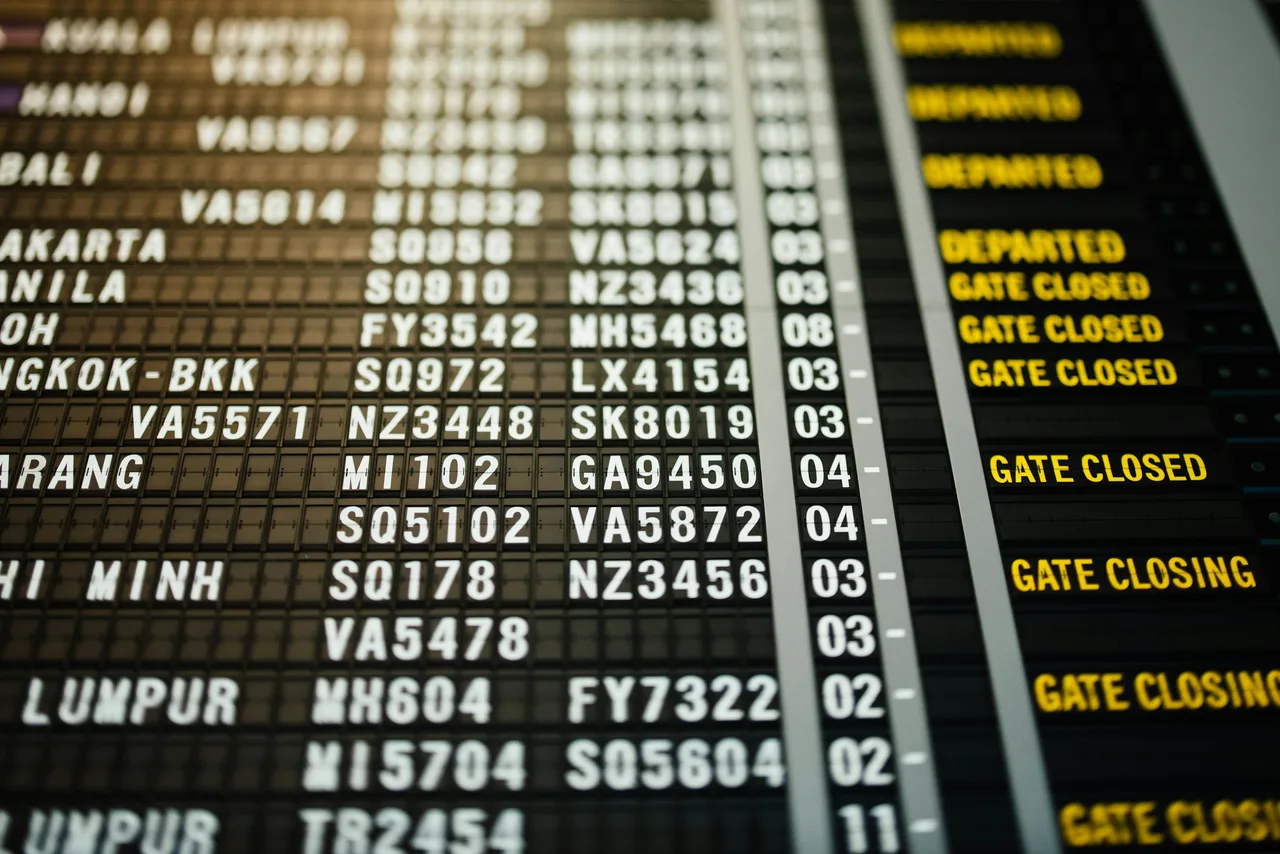
The single most common reason for a flight delay in the US is not weather. It is a late-arriving aircraft: the plane assigned to your flight landed late from wherever it was before, so your departure slips no matter how clear the sky is. In the most recent Bureau of Transportation Statistics month on record as of this writing (July 2026), late-arriving aircraft delayed 10.9% of all domestic flights — more than any other cause. Airline-controllable problems delayed 8.2%, national airspace congestion 6.9%, and extreme weather just 1.1%.
Knowing the category your delay falls into is not trivia. It decides what the airline owes you, because US passenger rights hinge on whether the delay was within the airline’s control. This page covers what actually delays flights, how to find out which reason applies to yours, and what each reason entitles you to.
Figures below come from the US DOT’s Bureau of Transportation Statistics, which requires reporting carriers to file a cause for every delayed flight, and from the DOT’s refund and customer-service rules current as of September 2026. A flight counts as “delayed” in this data when it arrives 15 or more minutes behind schedule.
The five official delay causes
Since 2003, US airlines have reported delays to BTS in five categories.
| Cause | Share of flights delayed (Jul 2026) | What it covers |
|---|---|---|
| Late-arriving aircraft | 10.9% | Your plane arrived late from its previous flight |
| Air carrier | 8.2% | Within the airline’s control: maintenance, crew, cleaning, baggage loading, fueling |
| National Aviation System (NAS) | 6.9% | Airspace and airport congestion, air traffic control, non-extreme weather |
| Extreme weather | 1.1% | Tornado, blizzard, hurricane — conditions that prevent flying outright |
| Security | 0.05% | Terminal evacuations, screening equipment failures, long checkpoint breaches |
For scale: 69.5% of domestic flights arrived on time that month, which is a weak month — June 2026 managed 73.1%. Summer thunderstorms and packed schedules do that every year.
Two honest footnotes to the official numbers. The “late-arriving aircraft” category is really a chain reaction: the original cause happened earlier in the day, to a different flight, and cascaded to yours. A 7 a.m. maintenance delay in Newark becomes a 9 p.m. “late aircraft” delay in Denver. And weather is undercounted in its own row — BTS notes that weather-driven congestion gets filed under NAS, and weather that delayed the earlier leg hides inside late-aircraft numbers. The true weather share of all delay is several times the 1.1% that “extreme weather” captures.
Why the reason determines what you’re owed
US law has no EU-style automatic cash compensation for delays. (If your trip touches Europe, different math applies — see our EU 261 compensation guide.) What you get in the US depends on who caused the delay.
Controllable delays — the airline must take care of you. Every major US airline has committed, in enforceable customer-service plans tracked on the DOT’s dashboard, to specific amenities when the cause was within its control (maintenance, crew, IT failures, baggage systems): a meal or meal voucher once the delay hits 3 hours, and a hotel plus airport transportation for an overnight. Late-arriving aircraft delays trace back to whatever caused the first delay in the chain — if that was the airline’s own doing, the delay is controllable and the commitments apply.
Uncontrollable delays — weather and most NAS. Storms and air traffic control are outside the airline’s control, so the amenity commitments do not apply. The airline still owes you transportation to your destination or, if you choose not to travel, a refund.
Any long delay — the refund rule. Under the DOT’s automatic refund rule, if your flight’s schedule changes significantly — including a delay of 3+ hours domestic or 6+ hours international — and you decline the rebooking, the airline owes you an automatic refund to your original form of payment, regardless of the delay’s cause. Credit card refunds must arrive within 7 business days; other payments within 20 calendar days. A voucher only replaces cash if you affirmatively accept one. The full playbook for a blown-up itinerary is in our airline delay compensation guide, and if the flight is outright canceled, the 24-hour cancellation and refund rules page covers that path.
The practical move at the gate: ask the agent, politely and specifically, “Is this delay coded as controllable?” Agents know, and the question signals you know what follows from the answer. If it is controllable and the board says 3+ hours, ask for the meal voucher — it is a written commitment, not a favor.
The real-world reasons behind the categories
Inside the five official buckets, a handful of concrete causes do most of the damage.
Crew timing out. Federal rules cap how long pilots and flight attendants can work. A day of small delays can push a crew over its limit all at once, turning a 40-minute delay into a cancellation while the airline hunts for a reserve crew. Coded as air carrier — controllable.
Maintenance writeups. A mechanical issue flagged before departure must be fixed or legally deferred before the plane moves. Usually an hour or two; coded air carrier — controllable.
Air traffic ground delay programs. When storms or volume shrink an airport’s arrival rate, the FAA holds inbound flights at their origin. Your sky may be blue; the problem is in Chicago. Coded NAS — not controllable.
The schedule itself. Airlines fly aircraft in tight daily loops with thin turnaround buffers. One early disruption ripples through every later leg, which is why late-arriving aircraft leads the table and why evening flights are statistically the most delayed. The first departure of the morning is the one that has not inherited anyone else’s problems.
That last point is the most useful planning lever: on a schedule you control, fly early in the day, prefer nonstops, and avoid the last connection of the night, when a misconnect has no recovery options left. If a delay ends with the airline bumping you from an oversold recovery flight, that scenario has its own cash rules — see involuntary bump compensation.
How to find the reason for your delay
- The airline’s app usually states it plainly (“delayed due to late arriving aircraft”) and updates as the reason changes.
- Ask the gate agent whether the delay is controllable. This is the classification that triggers meal and hotel commitments.
- Flight trackers show where your inbound aircraft actually is — the fastest way to sanity-check a “late aircraft” claim and estimate the real departure time yourself.
- After the fact, BTS publishes per-flight delay causes with a two-month lag, and the DOT dashboard lists exactly what each airline promises for controllable disruptions. Useful when you are escalating a reimbursement claim in writing.
Delay-cause percentages above are BTS figures for July 2026, the latest month published as of this writing, and the refund thresholds reflect the DOT automatic refund rule in force as of September 2026. Airline customer-service commitments are airline-specific — check your carrier’s plan on the DOT dashboard before you claim. A delay is never pleasant, but a correctly classified one is at least billable.
Affiliate disclosure: some booking, card, and trusted-traveler links earn us a commission at no extra cost to you. Rankings and recommendations are set by true cost, never by payout.
Keep readingAll stories
Security · Oct 20
TSA PreCheck vs CLEAR: Which Is Better in 2026

Security · Oct 18