
Security · Nov 1
REAL ID to Fly in 2026: What TSA Accepts, the $45 ConfirmID Fee, and How to Get One
The answer
You need a REAL ID — or one of roughly a dozen acceptable alternatives, a US passport being the most common — to get through airport security in 2026. Enforcement started May 7, 2025, and the grace period is over: since February 1, 2026, showing up with only a non-compliant license means paying a $45 TSA ConfirmID fee for a verification process that is not guaranteed to work. A passport gets you through at no extra cost; upgrading your license at the DMV costs about the same as one ConfirmID fee and fixes the problem for years.
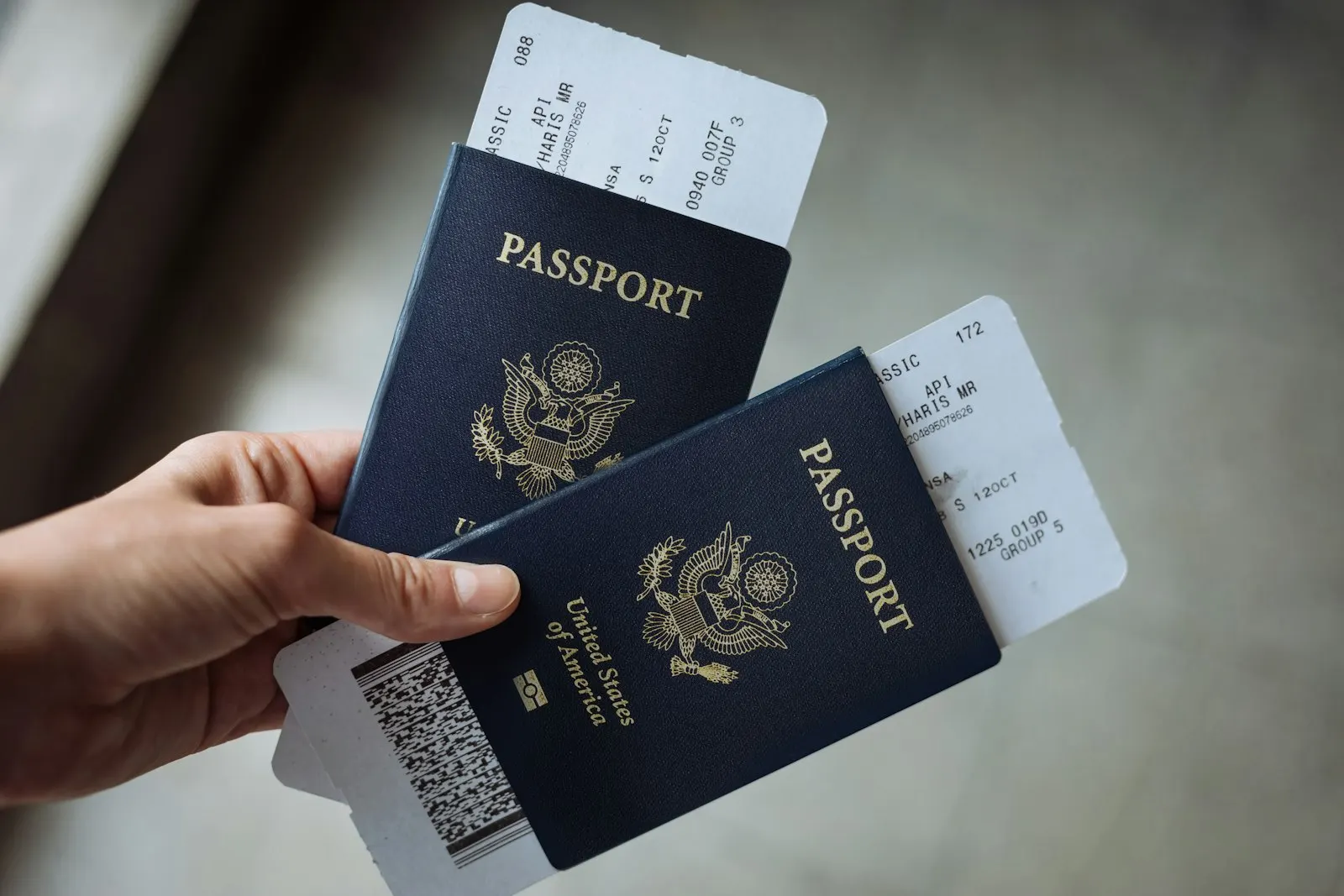
For about twenty years, REAL ID was the deadline that never arrived. That era is over. Enforcement began May 7, 2025, and as of this writing in October 2026, TSA’s REAL ID page is unambiguous: state-issued driver’s licenses and IDs that are not REAL ID compliant are no longer accepted as identification at airport checkpoints.
What changed this year is the price of ignoring that. Since February 1, 2026, a traveler who arrives without acceptable ID has exactly one path through security: pay $45 for TSA ConfirmID, an identity-verification process that TSA is careful to note may not succeed. Skip the fee with no acceptable ID, and you can be refused screening and miss your flight.
Here is the current, verified version of the rules — what counts, what the fallback costs, and what to do if your license still lacks the star.
The rule in one paragraph
Anyone 18 or older boarding a commercial flight in the US must present either a REAL ID-compliant state license/ID or another form of identification from TSA’s acceptable ID list. A compliant card carries a star marking in its upper portion — if your license has the star, you are done reading on your own account and can skip to the checklist for whoever in your family still procrastinates. No star, no acceptable alternative: you are in $45 ConfirmID territory.
By TSA’s own figures, compliance is now the norm — the agency reported in February 2026 that 95–99% of travelers are presenting REAL IDs or other acceptable identification at checkpoints. The rule is no longer waiting for the public to catch up, which is precisely why the remaining stragglers now pay for the privilege.
What TSA accepts instead of a REAL ID
A REAL ID is one acceptable document among many, not the only one. TSA’s current list of alternatives:
| Document | Notes |
|---|---|
| US passport or passport card | The most common fallback; the card alone works for domestic flights |
| Enhanced Driver’s License (EDL) / Enhanced ID | Issued by Michigan, Minnesota, New York, Vermont, and Washington; acceptable even without a star |
| DHS trusted traveler cards | Global Entry, NEXUS, SENTRI, FAST membership cards |
| US Department of Defense ID | Including dependent IDs |
| Permanent resident card | |
| Border crossing card | |
| Tribal Nation photo ID | Including Enhanced Tribal Cards |
| HSPD-12 PIV card | Federal employee credential |
| Foreign government passport | |
| Canadian provincial license / INAC card | |
| TWIC | Transportation worker credential |
| Employment Authorization Card (I-766) | |
| US Merchant Mariner Credential | |
| Veteran Health Identification Card |
A few wrinkles worth knowing from the same TSA page:
- Mobile driver’s licenses count — TSA accepts mDLs from approved states, provided the underlying credential is a REAL ID, EDL, or EID. Apple Digital ID, CLEAR ID, and Google ID passes are listed as being in a testing phase, so treat a phone-only ID as a convenience layered on a physical card, not a replacement for carrying one.
- Expired ID has a grace window. TSA currently accepts acceptable IDs up to two years past their expiration date. An expired passport from last year still works; one from 2019 does not.
- The Global Entry card is quietly useful here. If you hold Global Entry, the physical card in your wallet is checkpoint-acceptable ID on its own — one more reason the $120 membership beats CLEAR for most travelers, a comparison we run in full in our Global Entry vs. TSA PreCheck guide.
Children don’t need ID
TSA does not require travelers under 18 to show identification on domestic flights when traveling with a companion. The adult needs acceptable ID; the kids need boarding passes. (One exception TSA flags: an unaccompanied minor who wants to use TSA PreCheck screening needs acceptable ID to get the expedited lane.)
The $45 ConfirmID fee, explained
This is the part that changed in 2026, and it deserves precision because the first version of this story most people heard — “you’ll get extra screening” — is out of date.
Under the system TSA rolled out on February 1, 2026, a traveler without acceptable ID has the option to pay a $45 fee for TSA ConfirmID, which buys a 10-day travel period — relevant if your return flight is inside the window, since you will presumably still be without acceptable ID on the way home. Per TSA’s rollout announcement, the process works like this:
- Pay the $45 fee online at TSA.gov/ConfirmID before you reach the checkpoint.
- Bring the payment receipt — printed or a screenshot — plus whatever government-issued ID you do have (your non-compliant license, for instance).
- Present both at the checkpoint and follow the officers’ instructions through the identity-verification process.
Two caveats TSA itself attaches. First, verification is not guaranteed — ConfirmID is an attempt to confirm who you are, and if the attempt fails, you do not fly. Second, the process takes time, so arrive earlier than you otherwise would. A traveler cutting it close on a 6 a.m. departure with a non-compliant license and an unpaid fee is the person you see pleading at the podium.
The arithmetic is unkind on purpose. In most states, upgrading to a REAL ID costs about the same as a standard license renewal — typically $30 to $60, and often nothing extra if you convert at your regular renewal. One forgotten-wallet trip through ConfirmID costs $45 and guarantees nothing. The fee exists to make non-compliance more expensive than compliance, and it succeeds.
How to get a REAL ID
The federal government sets the standard; your state DMV issues the card. TSA’s REAL ID FAQ says to start at your state licensing agency’s website for the exact document list, but the federal baseline is consistent. You will need documentation showing:
- Full legal name (certified birth certificate or valid passport, typically)
- Date of birth
- Social Security number — if you can’t find your card, a W-2, an SSA-1099, a non-SSA-1099, or a pay stub showing your name and full SSN works
- Two proofs of address of your principal residence — utility bills, lease, bank statements, in various state-specific combinations
- Lawful status in the US
The practical friction is almost entirely in the paperwork, not the process: name mismatches are the classic trap. If your birth certificate says one name and your current license another — marriage, divorce, any legal name change — bring the certified linking documents (marriage certificate, court order). Most states let you start the application online and book a DMV appointment, but the first REAL ID issuance generally requires an in-person visit so the documents can be inspected.
Processing time is the other planning number. The card arrives by mail in most states — allow two to three weeks, more during crunches. A REAL ID is not a document to pursue the week before a flight; it is a document to pursue now, while the next trip is abstract.
How to check the card you already have: look at the top portion of your license for a star marking (the exact design varies by state — a gold or black star, sometimes inside a circle or, in California, cut into a golden bear). Enhanced licenses from the five EDL states — Michigan, Minnesota, New York, Vermont, Washington — are acceptable with or without a star. A card stamped “Federal Limits Apply” or “Not for Federal Identification” is the opposite of a star: it is a card telling you to read this article.
If you don’t have a REAL ID: the checklist
What to actually do, in descending order of preference, for a flight you are taking before your DMV appointment comes through:
- Bring your passport. Valid — or expired less than two years — a US passport or passport card clears the checkpoint at no extra cost. This is the entire solution for most people, and the reason to keep the passport in the bag even for domestic trips. Put it with your boarding documents the night before, not in the morning scramble.
- Check your wallet for a sleeper. A Global Entry/NEXUS/SENTRI card, military or dependent DoD ID, permanent resident card, VHIC, or an Enhanced Driver’s License from MI/MN/NY/VT/WA are all fully acceptable. People routinely carry qualifying ID without realizing it.
- No alternative at all? Pre-pay ConfirmID. Go to TSA.gov/ConfirmID before you leave for the airport, pay the $45, and carry the receipt (screenshot is fine) alongside your non-compliant license. The payment covers a 10-day travel period, so one fee should cover a round trip inside that window.
- Arrive early and plan for failure. ConfirmID verification is explicitly not guaranteed. Add at least an extra hour, and know your airline’s same-day rebooking policy before you need it.
- Kids are fine. Under-18s on domestic flights don’t need ID when traveling with you.
- Book the DMV appointment today. Gather the five document categories above — name, birth date, SSN, two address proofs, lawful status — and convert at your next renewal if a special trip feels like too much. The $45 you don’t pay ConfirmID funds most of the upgrade.
One thing the ID rule has not changed: everything else about the checkpoint. Your liquids still answer to the 3-1-1 rule, and your bag still answers to the carry-on sizers at the gate. A REAL ID gets you to the conveyor belt; it buys no forgiveness on it.
Enforcement status, the acceptable-ID list, ConfirmID terms, and application requirements above were verified in October 2026 against TSA’s REAL ID pages, its acceptable-identification list, and its February 2026 ConfirmID announcement. State fees and issuance times vary — your DMV’s website has the binding numbers. The deadline spent twenty years as a punchline; the $45 fee is the government’s way of saying it has stopped laughing.
Affiliate disclosure: some booking, card, and trusted-traveler links earn us a commission at no extra cost to you. Rankings and recommendations are set by true cost, never by payout.
Keep readingAll stories

Security · Oct 20
TSA PreCheck vs CLEAR: Which Is Better in 2026

Security · Oct 18